How can we help?
We've put together a list of the most frequently asked questions. If there's anything we can help you with, don't hesitate to get in touch with a member of our team.
GEM80 FAQs
Why should I upgrade my GEM80 PLC?
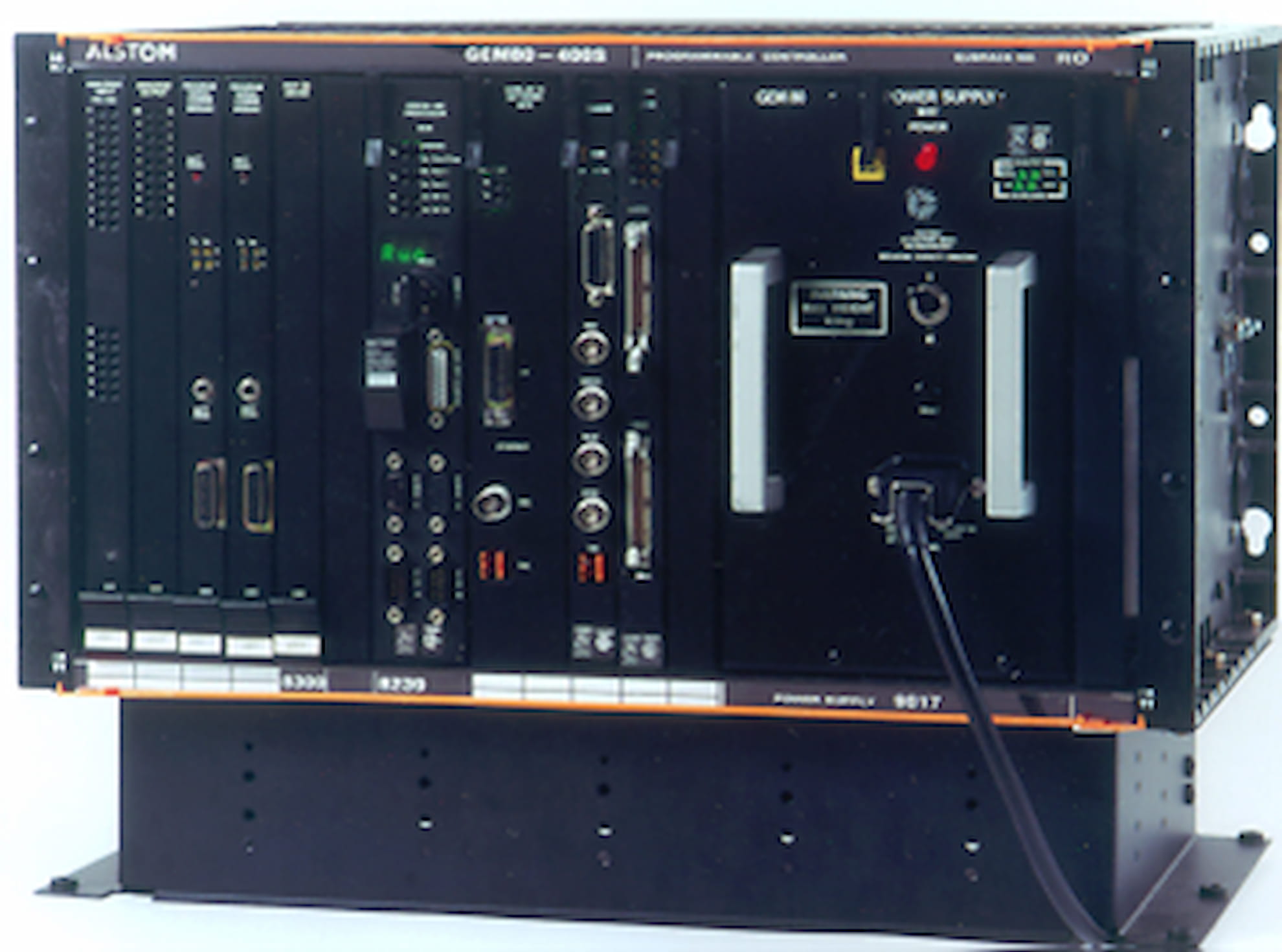
The GEM80 range was introduced by GEC Industrial Controls in 1979, and released various versions and upgrades until March 2017 when GE Power Conversion closed the GEM80 facility in Kidsgrove. The PLC equipment is now obsolete, with reducing availability of spares and support.
Why should I take a phased approach to upgrading a GEM80 PLC?
GEM80 PLC sits in a wide variety of industrial sites, especially those 24/7 high volume production sites such as power plants, food and beverage, metals processing and chemical manufacturers. These are sites where downtime must be kept to a minimum and there must be minimal risk in the upgrade. Transicon’s phased approach can minimise downtime and risk, whilst bringing you fully up to date with modern controls equipment.
What are the risks involved in a phased approach to upgrading a GEM80 PLC?
Very little if you use Transicon’s . Our phased approach minimises the risk and downtime to our customers: Pre-Site - MIGRATION A GEM80 Code converter has specifically been developed to automatically convert GEM80 programs including the data and rung comments, along with an extensive library of proven GEM80 special functions already developed and in service for both Rockwell PLC and Siemens PLC ranges. We also have the in-house expertise to completely reprogram the PLC code if required. We run extensive tests and validation of software in house to check system functionality before attending your site. Site Phase 1 - TRANSICON SCANNER CARD The scanner card connects the GEM80 Basic IO modules to a new PLC via Ethernet. This enables the verification of the converted system code using the original plant IO. At a future date the GEM80 IO would then be replaced (Phase 2). Should a problem arise then it would be a simple matter to reconnect the IO to the original GEM80 Controller. Site Phase 2 - GEM80 IO INTERFACE Our interface cards enable us to reuse the existing GEM80 wiring/connectors when replacing GEM80 IO. New I/O Modules are prewired to the Interface cards which are housed in an Interface subrack mounted on a predrilled baseplate. The assembly is fully tested during factory test, reducing any potential wiring errors on site. The assembly is designed to quickly replace a GEM80 IO subrack with little or no wiring carried out onsite. This approach significantly de-risks project installation and time on site.
How do I make system improvements with a phased upgrade approach?
Once we’ve converted and upgraded your GEM80 PLC to a modern equivalent, such as Siemens PLC or Allan Bradley / Rockwell PLC, our team of control system engineers can implement desired system improvements to maximise the capability of modern PLC equipment. These improvements can be delivered within planned maintenance windows to minimise plant downtime.
How long will my GEM80 PLC upgrade take?
We ensure that the whole process line remains operational with minimal changes during a GEM80 upgrade. Typically, we can deliver the GEM80 PLC Upgrade (Phase 1) on 1-2 days onsite, with the I/O changes (Phase 2) taking place during maintenance periods.
What PLC options are available?
A GEM80 Code converter has specifically been developed to automatically convert GEM80 programs including the data and rung comments, along with an extensive library of proven GEM80 special functions already developed and in service for both Rockwell PLC and Siemens PLC ranges. We also have the in-house expertise to completely reprogram the PLC code if required.
How can I find out more about GEM80 PLC Upgrades?
Talk to our in-house experts, we’ll be happy to assist, contact details below. You’re more than welcome to visit us here in Telford, Shropshire, UK, or we can come to you to demonstrate our low risk, low downtime upgrade options. We’ve delivered many low risk, low downtime solutions and would be pleased to talk about any questions you may have.
Can you still buy GEM80 PLC Controllers?
No, since the closure to the GEM80 factory in Kidsgrove the GEM80 is now obsolete. Transicon has successfully migrated many GEM80 systems with modern replacements such as Siemens or Rockwell.
How do I communicate to GEM80 systems during GEM80 upgrade?
Transicon has a tried and tested method for maintaining communication links with GEM80 systems, GEMSTART (CCU) units, STARNET, GEMLAN-T, and other third-party devices.
How do I upgrade a GEM80 with IMAGEM graphics?
Transicon have successfully upgraded many GEM80 PLCs with IMAGEM graphics. We have an experienced team which understands the complexities of these system. Transicon have a Test bench GEM80 with IMAGEM which we can use when developing a SCADA replacement solution. Transicon has an indepth knowledge of iFIX, WINCC, Factory Talk View etc.
What communication protocols can a GEM80 support?
The GEM80 is now an obsolete product, the main protocol was called ESP which all GEM80s supported. Later GEM80 systems also had a GEMLAN-T option module which gave the GEM80 Ethernet communications. A GEMLAN-T supports ESP over Ethernet along with Modbus/TCP.
What benefits does Transicon's phased low-risk approach offer during GEM80 PLC upgrades?
Our phased approach minimizes cost, downtime, and risk, ensuring a smooth transition to modern control equivalents for GEM80 systems.
Who can offer training for GEM80 PLCs?
Transicon provides a range of services, including maintenance days, annual spares audits, test and repair, full obsolescence management, and training for GEM80 PLCs.
Who can support GEM80 PLC obsolescence concerns?
Transicon can assist in planning for the future by maintaining current systems, helping with spares acquisition, and supporting upgrades to modern equivalents. Our experts offer full obsolescence management solutions. We have a dedicated support Team focused on maintaining your site health.
Who is experienced with GEM80 PLC systems?
Transicon has an in-house team which includes senior members of the original GEM80 development and support engineering team, providing decades of experience in hardware design, testing, and repair, which is unparalleled.
What is the GEM80 Scanner module, and how does it aid in upgrades?
The Transicon GEM80 Scanner module, part of our upgrade Phase 1, connects GEM80 Basic IO modules to a new PLC via Ethernet. It verifies the converted system code using the original plant IO before future replacement.
How do I upgrade a GEM80 System?
Transicon has upgraded many GEM80 systems with our experience and knowledgeable Engineers. From industries such as Metals, Water, Food, Mining, Automotive, Power, etc.
Automated Guided Vehicles FAQs
What is an AGV?
An AGV (automated guided vehicle) is a driverless mobile robot that transports materials between fixed points in a manufacturing or warehouse environment. AGVs navigate using onboard sensors, mapped routes or guidance markers, range from compact load carriers to heavy-duty platforms and are a proven alternative to manual forklift and tugger operations.
The technology is mature and globally deployed across sectors from automotive to pharmaceuticals, and is increasingly designed into new UK manufacturing facilities as standard. At their core, AGVs are a material flow solution: a reliable, scalable alternative to manual operation.
What is the difference between an AGV and an AMR?
An AGV follows a defined, pre-mapped route with consistent safety zones and predictable throughput. An autonomous mobile robot (AMR) can dynamically reroute around obstacles using onboard decision-making. Most manufacturers prefer AGVs because they deliver more predictable material flow and make safety planning around pedestrians and manual traffic considerably easier.
AMRs have a real place — particularly in condensed environments such as laboratories or small-format warehouses — but the right choice depends on your process, your site and your throughput requirements rather than on which technology sounds more advanced. A good integrator will walk you through both before recommending one.
Why are more UK manufacturers adopting AGVs?
UK manufacturers are adopting AGVs to address two pressures: safety and labour costs. Forklift trucks are involved in around 25% of workplace transport accidents in Great Britain — roughly 1,300 incidents a year. Meanwhile, warehouse wages account for 50–70% of operating costs and qualified forklift drivers are increasingly in short supply.
AGVs automate repetitive material movement, reducing safety risk, lowering labour dependency and enabling longer operating hours — freeing skilled operators to focus on higher-value tasks. Combined with pressure to run longer hours and hit consistent output targets, many businesses are concluding that AGVs are both safer and more scalable than adding headcount or extending shifts.
Where do AGVs add the most value in a manufacturing or warehouse environment?
AGVs add the most value where there is repetitive, predictable movement between known points — production lines, assembly cells, warehouses, inter-building transfers and machine-to-machine handovers. They are particularly effective where driver shortages, forklift-related safety risks or fatigue-related errors are already a recognised problem.
They are less suited to ultra-high-speed operations typical of large-scale e-commerce distribution centres, where fixed high-throughput conveyors outperform any mobile robot on raw throughput. AGVs are also a poor fit where processes are too variable to map meaningfully. Honest scoping matters: the wrong application damages both the project and the technology's reputation.
Where do AGVs struggle or prove to be the wrong solution?
AGVs are not the right answer for every application. They struggle in ultra-high-speed distribution environments where fixed conveyors outperform mobile robots on throughput, and in operations where processes are too variable or chaotic to map reliably. A business case built around replicating a disorganised manual operation is unlikely to deliver the expected return.
Honest scoping is essential. If a process change, a conveyor or a layout improvement would solve the problem more effectively, that is the right first step. At Transicon we will tell you clearly when AGVs are not the right fit for your site.
How do I know if AGVs are the right solution for my business?
Start with the problem, not the technology. If the challenge is moving materials safely, reliably and flexibly between fixed points — across multiple routes, shift patterns or sites — AGVs are likely a strong fit. If a process tweak or layout change would solve the issue more effectively, automation may not be the right first step.
At Transicon we work through the business case honestly with you, including where automation is and is not the right answer. The goal is always to solve the problem in the most effective way, not to sell a system.
What is the first step when scoping an AGV project?
The first step is defining the problem clearly before selecting any technology. Specify the load — weight, dimensions and centre of gravity, always designing for the largest thing you will ask the AGV to move — map the route and zones, plan integration and identify all stakeholders from the outset.
Skipping this upfront clarity is the single most common reason AGV projects run late, over budget or underdeliver. A structured scoping exercise covering process, site, load, integration and people sets everything that follows up for success.
How much do floor conditions and site layout affect an AGV deployment?
Significantly — and they are routinely underestimated. Real industrial floors are rarely perfectly level and AGV technology must cope with realistic conditions. Brownfield sites impose tight constraints on routes, turning circles, safety zones and legally required rescue spaces, all of which directly affect travel speed and throughput.
A proper site assessment early in the project will surface expensive surprises — crane footings, roller-shutter doorways, drainage channels and uneven transitions between bays — long before they affect the timeline or the budget. This is one of the most valuable investments you can make at the start of a project.
Why are handover points so critical in AGV system design?
Handover points — where an AGV transfers a load to a conveyor, rack, machine, pallet position or another AGV — dictate cycle time, drive safety-zone decisions and shape fleet sizing. Getting them right is more consequential than optimising travel speed across open floor, yet they are frequently underestimated in early project planning.
A poorly designed handover can undermine the throughput of an otherwise well-specified system. At Transicon we assess handovers first on any new AGV project: get those right and the rest of the material flow tends to fall into place. Get them wrong and no amount of software tuning will recover the lost performance.
How long does an AGV project take from first conversation to go-live?
A straightforward AGV project — small fleet, well-defined process and limited integration — typically takes six to nine months from first conversation to live operation. Complex deployments involving large fleets, bespoke payloads or new-build facilities can take considerably longer, sometimes multiple years.
The biggest variable is the number of system interfaces the AGV fleet must communicate with: fleet management software, ERP, MES, PLCs, fire alarms, safety systems, Wi-Fi and building services. Identifying and resolving these early makes timelines more realistic and significantly reduces the risk of costly rework on site.
How should I manage operator concerns when introducing AGVs?
Involve operators from the start of the project, not the week before go-live. Projects that run into trouble almost always do so because the shop floor felt a decision had been imposed on them. Operators who were not consulted can resist in ways that are difficult to plan for and hard to recover from.
At Transicon we recommend early, transparent communication about what is changing and why, hands-on training before go-live — including physically driving the AGV with a remote control to build familiarity — and where possible VR walkthroughs so operators can visualise the new environment in advance. Operators engaged early consistently become the strongest advocates for the technology.
Which teams should be involved in an AGV project, and when?
All key teams should be involved from day one — not at the end. Operations and maintenance need to understand how the system will run shift by shift. Finance needs full visibility of the business case, including ROI and purchase-versus-lease options. IT is critical and is frequently brought in too late.
AGVs communicate over wireless networks and sit inside your cyber security perimeter, so approvals, network provisioning and infrastructure work need to start at project kick-off. Bringing any of these teams in late is one of the most common causes of delay on otherwise sound AGV projects.
How do AGVs integrate with existing ERP, MES and control systems?
AGV fleets rarely operate in isolation. A fleet management system sits above the individual vehicles and typically communicates with your ERP, WMS, MES, PLCs and site systems such as fire alarms and roller-shutter doors. In simpler deployments the interface may be a call button; in complex ones it involves live data flowing in real time.
As a UK-based systems integrator, Transicon provides the control and intelligence layer between the AGV fleet and your wider operations — including MES integration that links AGV activity with production schedules, planning tools and traceability data to support real-time coordination and data-driven decision-making. Defining these interfaces early has a major effect on cost, timeline and day-one capability.
Do AGVs need a dedicated Wi-Fi network?
Yes. AGVs rely on a stable, low-latency wireless connection to the fleet management system. Sharing bandwidth with general corporate traffic risks communication dropouts that can stall the fleet and disrupt material flow. A dedicated network, properly surveyed and sized for the deployment, is the right foundation.
Because this touches cyber security and IT infrastructure, network planning needs to start at project kick-off rather than late in implementation. Retrofitting wireless coverage after the AGVs arrive on site is one of the quickest ways to push a go-live date back and one of the most avoidable causes of delay.
How is AGV reliability measured day to day?
AGV reliability is measured through availability — the proportion of time each vehicle and the fleet as a whole is ready to run. A good fleet management system reports this at individual-vehicle and total-fleet level, flagging faults in real time for rapid diagnosis, often remotely.
Fleet-level availability usually matters more than single-vehicle uptime. In most deployments the fleet dynamically reallocates tasks around a unit that is out of service, so one vehicle stopping does not halt production. It is those availability figures — not headline speed or payload — that tell you how the automation is actually performing against the business case.
What is the best approach to AGV charging?
The best AGV charging strategy is opportunity or in-process charging — topping up during existing waiting times, such as during a handover or in front of a conveyor. This keeps vehicles in the flow, avoids dedicated charging downtime and can significantly reduce the fleet size required, directly impacting capital cost.
Dedicated charging stations and scheduled battery swaps also work well, particularly for heavier-duty fleets running long cycles. The key is to design the charging strategy around the process from the outset rather than bolting it on at the end — it has a direct impact on fleet sizing, floor layout and overall system throughput
Can I start with a small AGV deployment and scale up later?
Yes — and this is almost always the right approach. Start with the simplest, most straightforward process, prove the value and build confidence with operators, maintenance teams and management. Once stable, extending to more complex routes or additional vehicles is a far easier conversation at every level of the organisation.
Trying to automate the hardest process first is a common trap that produces missed timelines, frustrated teams and an unfair reputation for the technology. Phased deployment is consistently the lowest-risk path to a successful AGV rollout, and the lessons from phase one will directly improve the speed and quality of phase two.
How much does an AGV system cost?
There is no standard price for an AGV system — cost depends on load, number of vehicles, integration complexity, infrastructure requirements and the level of customisation required. A single configured AGV for a simple task costs very differently from a multi-vehicle fleet with full ERP and MES integration.
At Transicon we encourage customers to think in terms of total cost of ownership rather than headline purchase price: vehicle, integration, Wi-Fi and charging infrastructure, maintenance and downtime risk — weighed against the labour, safety and throughput cost of continuing without automation. That comparison is usually far more useful than any vendor quote in isolation.
What is a realistic payback period on an AGV project?
Typical payback periods sit in the two-to-four-year range for straightforward AGV deployments, though this varies with wage rates, shift patterns, the cost of the current operation and the scope of integration work required. Payback tends to accelerate significantly in multi-shift operations.
It also accelerates in environments where forklift incidents already carry meaningful insurance, downtime or compliance cost. We always recommend modelling ROI honestly — including integration, infrastructure and change management costs — rather than relying on headline payback figures from vendor brochures.
Can AGVs run 24 hours a day, seven days a week?
Yes — continuous, multi-shift operation is one of the strongest arguments for AGV deployment. The vehicles are designed for round-the-clock duty. The practical limits are battery and charging strategy, preventative maintenance windows and the availability of people to resolve faults outside normal working hours.
In practice, 24/7 operation is achieved with an appropriately sized fleet and in-process charging, so that no single vehicle is out of action for long. If your business case depends on unattended overnight running, that requirement must be designed into the system from the outset rather than assumed.
Can AGVs operate outdoors or transfer materials between buildings?
Short inter-building transfers — under a canopy, through a covered link or across a short yard — are well within current AGV capability and a common use case for UK manufacturing sites. Full outdoor operation is more demanding, with weather, surface conditions, lighting and positioning accuracy all harder to control.
Some fully outdoor applications are possible with appropriately specified vehicles and navigation systems, but the scope needs to be defined carefully. If inter-building transfer or outdoor running is part of your use case, flag it at the scoping stage so the right technology and safety design choices can be made from the start.
What UK safety standards apply to AGV systems?
AGV systems in the UK are governed primarily by ISO 3691-4 — the international safety standard for driverless industrial trucks — alongside the Machinery Supply Regulations (UKCA marking, or CE marking for units into Northern Ireland or the EU), PUWER and the Health and Safety at Work Act. The system is risk-assessed as a whole rather than as individual components.
As your systems integrator, Transicon manages this process, documents it correctly and ensures the paperwork is ready for HSE scrutiny should it ever be needed.
Can AGVs work in cold stores, cleanrooms or ATEX environments?
Yes — all three are possible with the right specification. Cleanroom-rated AGVs meet strict ISO cleanliness classifications. Cold store operation requires vehicles rated for low temperatures, with attention to battery chemistry and condensation management. ATEX-rated AGVs for potentially explosive atmospheres are a specialist area that significantly narrows the supplier field.
In all three cases, a standard warehouse AGV will not do. The operating environment must be part of the specification from day one — retrofitting these requirements after procurement is costly, time-consuming and in some cases not possible.
How do AGVs coexist with manual forklifts and pedestrians?
Mixed-traffic environments are common on UK manufacturing sites and entirely workable, provided the design is deliberate. Defined AGV routes and zones, safety scanners, legally required rescue spaces, floor markings and signage help everyone understand where vehicles will and will not travel.
Change management for the people sharing the space matters as much as the technology. Manual forklift drivers and pedestrians need to understand from day one how to interact with the new vehicles — this is not something that can be communicated in a single briefing the week before go-live.
What happens when an AGV breaks down?
In most fleets, very little that is visible to the wider operation. A well-designed fleet management system detects faults in real time, isolates the affected vehicle and reallocates tasks to the remaining fleet so material flow continues. Diagnostics are usually available remotely, dramatically shortening mean time to repair.
Single-vehicle unavailability rarely halts production, which is why business cases are built around fleet-level availability rather than individual vehicle uptime. For single-AGV deployments a manual fallback must be planned from the outset — which is one of the practical arguments for multi-vehicle deployments even in modest applications.
How do I find out more about AGVs for my site?
Talk to the Transicon team. We have been integrating automation and control systems into UK manufacturing since 1967 and are happy to discuss whether AGVs are the right fit for your site, what a phased deployment could look like and how to build a sound business case.
Whether you are exploring AGV technology for the first time or looking to expand an existing deployment, we can help you scope the application honestly — including where it is not the right answer. You are welcome to visit us in Telford, Shropshire, or we can come to you to discuss your requirements in detail.

Any Questions? Just let us know
You can send us a message using the contact form or you can speak to us now by calling...